We’re bringing together session recordings from the ReGen 2025 Resource Stage and Circularity Stage. Two spaces where recovery meets regeneration in real, measurable ways.
In each session, you’ll see how people are cutting waste, recapturing value and rebuilding systems that last. These aren’t theories. They’re tested practices you can adapt tomorrow.
And this is just the start. We’re adding more recordings in the months ahead, including conversations that haven’t been released anywhere else.
If you want first access, make sure you’re subscribed.
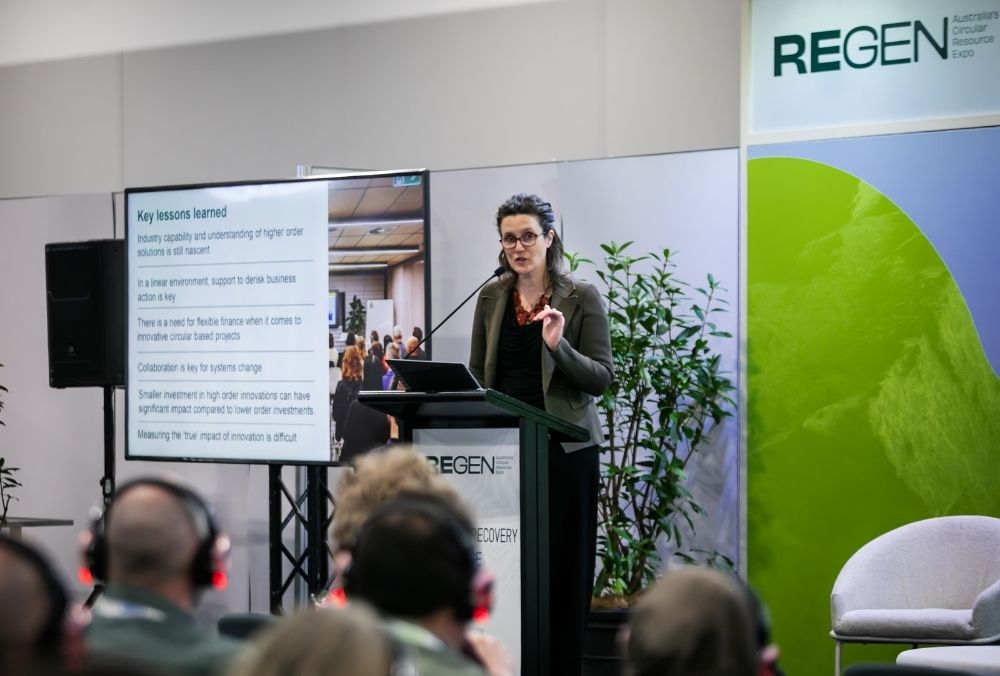
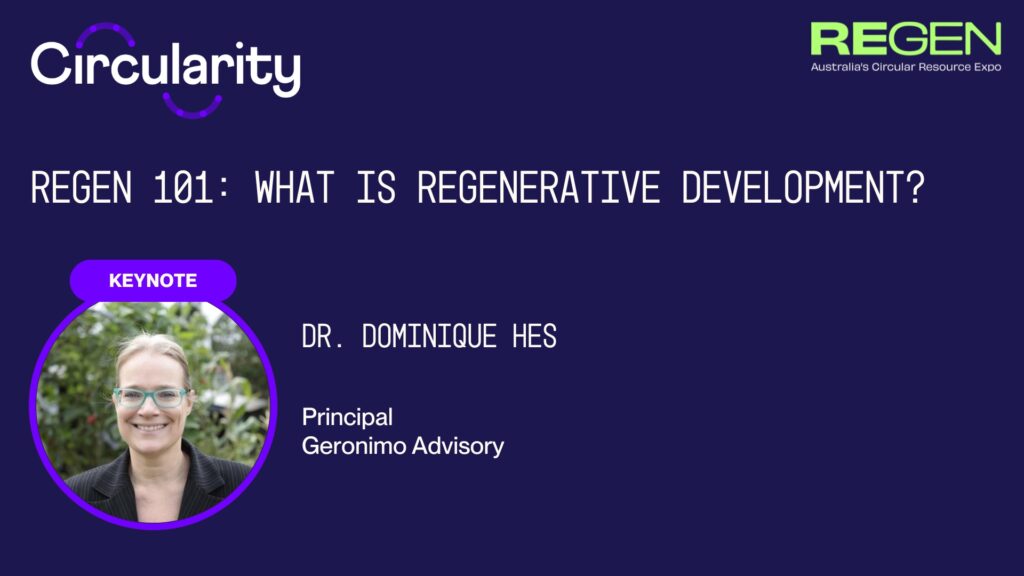
Regeneration has become a buzzword, but Dr. Dominique Hes brings it back to what you can see and apply. In this session, she shows why Australia can’t reach a circular future by managing materials alone. We also need to rethink the stories, relationships and values that shape how we design, make and use resources.
Drawing on her work in science, engineering, design and governance, Hes explains regeneration in clear, usable terms. You’ll learn how to apply regenerative thinking across policy, operations, design and community. This is regeneration without the jargon, built for people who want results.
Waste to Energy: Clearing the Noise, Focusing on the Work
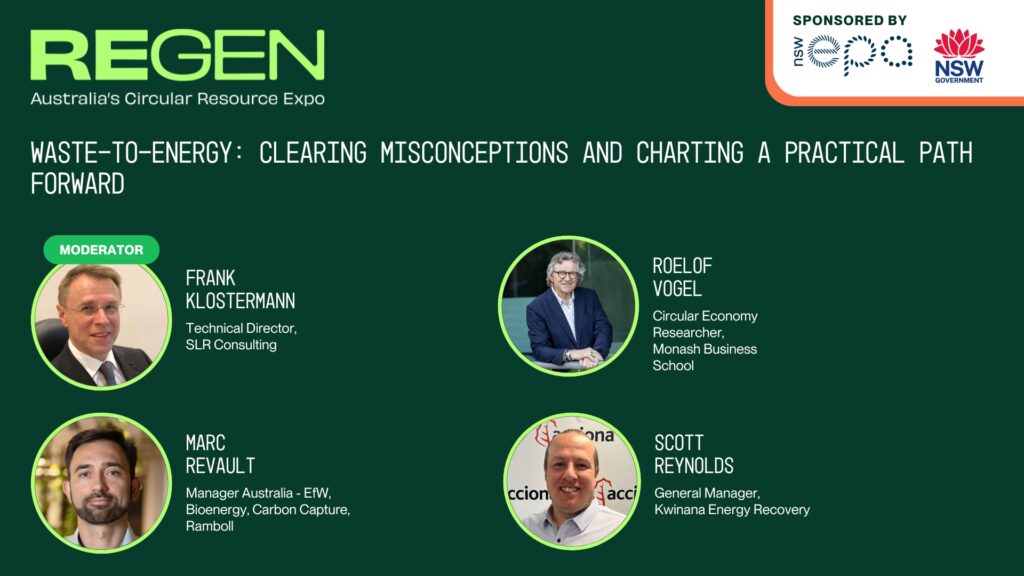
Australia’s running out of landfill space, and residual waste keeps rising. Communities want cleaner, safer, circular options. In this session, leaders from SLR Consulting, Kwinana Energy Recovery, Ramboll and Monash Business School cut through the misconceptions of Waste to Energy (WTE).
Their message was direct: start with the problem, not the ideology. Australia isn’t trying to reinvent anything. We’re applying proven systems to a growing challenge. If you want a clear view of how WTE works and why it matters, this session delivers it without the spin.